
Choosing the Right Flowers for Your Space
When it comes to choosing the right flowers for your space, start by understanding your room’s personality and overall vibe. A bedroom often feels best with soft, romantic roses, while a kitchen can shine with cheerful sunflowers that lift the mood. Think about the purpose of the room and your existing decor before selecting blooms, because light plays a huge role. In bright, sunny rooms, you can use bold, vibrant blooms like gerberas or tulips, while dimmer spaces benefit from lighter-colored flowers that reflect whatever light is available.
Some flowers are popular, natural crowd-pleasers that always remain a classic, such as peonies for a touch of luxury without feeling overwhelming, or hydrangeas for soft fullness in different colors that complement your palettes. If you prefer low-maintenance styling, try eucalyptus branches or baby’s breath for added texture without demanding constant attention. I often suggest planning around a seasonal selection—spring daffodils and cherry blossoms, summer bright zinnias, fall chrysanthemums and marigolds, or winter amaryllis, evergreen accents, and red berries. These seasonal choices usually cost less, last longer, and are naturally suited to current conditions, making your home feel fresh without trying too hard.
Essential Flower Arrangement Techniques
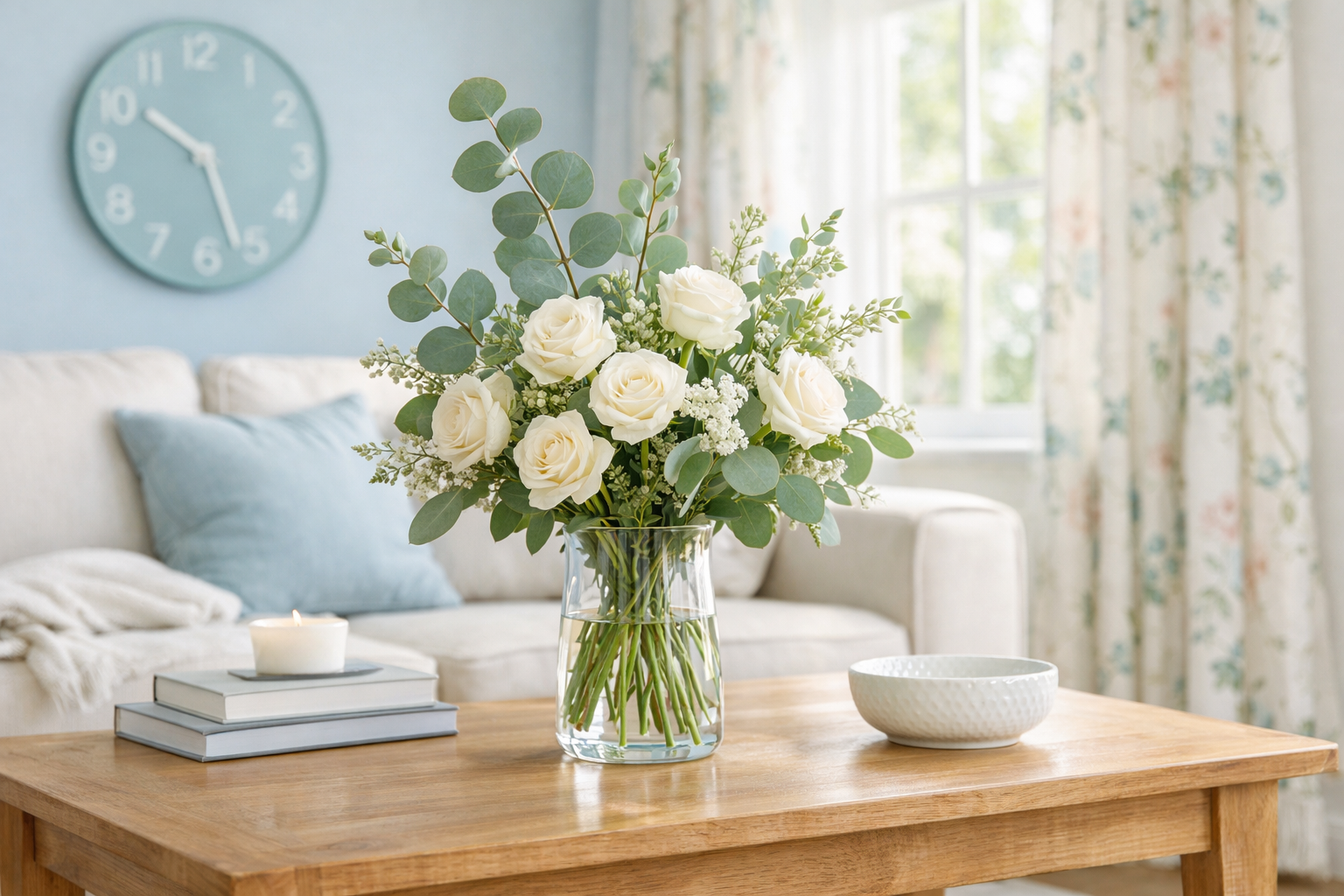
Great styling begins with essential flower arrangement techniques that even beginners can follow. One classic rule is the thirds approach, often used by professional florists, based on the principle of placing three different heights—tall, medium, and short elements—to build visual interest so the display never looks flat. The tallest stem usually anchors the design, medium-height blooms fill the gaps, and soft greenery creates a natural base. I often explain this using a simple example: a wakefit eucalyptus stem, even an artificial and lifelike one in yellow, can elevate indoor decor beautifully—whether it’s a 66 cm stem placed beside a 12-inch pastel blue floral wall clock with an elegant round design for living spaces. The key is structure first, styling second.
Next comes color harmony, and this is where many homes improve instantly. Keep it simple and stick to a maximum of three tones for a cohesive home look, using the 60-30-10 formula—60% dominant, 30% secondary, and 10% accent. Monochromatic schemes with soft shades of pink and whites feel sophisticated and calming. Here’s a pro tip: use the triangle technique to create balance by imagining and positioning each main focal bloom with two supporting stems to guide the eye across multiple displays. Finally, think about vessel selection as a smart strategy—a vase in clear glass showcases stems, while ceramic or metal containers add a modern edge. Always match the arrangement so it stands about one-third of the total height of the container for perfect proportion.
Home Refresh: Simple Decorating Tips with Flowers
Room-by-Room Flower Decoration Ideas
A smart room-by-room approach makes every corner feel intentional. In the living room, use flowers as power statement pieces with large arrangements on coffee tables that act as conversation starters, while side table bouquets add intimate touches to seating areas. I often suggest using multiple small vases for better cohesion, because guests always appreciate thoughtful details. In the bedroom, keep things floral yet soft for serenity—calming lavender supports relaxation, and white blooms create peaceful vibes. It’s wise to avoid overly fragrant flowers that may disrupt sleep. You can even echo a flower pattern from curtains, like a wakefit set with 2 petal prints in green, adding a soft texture with light blockinginterior style for the house. Decorative elements such as a single door accent, a 25″ black metal wall art with 3 abstract panels, or layered home decor near the bedside can tie the look together while keeping arrangements low and not blocking partners. Even window sills can hold potted flowering plants for subtle charm.
“In the dining area, flowers bring instant elegance and help the table shine with sophisticated centerpieces, especially when you schedule them for special occasions and switch to hardy stems for everyday use. The kitchen and bathroom deserve simple accents too—fresh herbs like basil, rosemary, and mint feel practical near windows where they catch the morning light. For spaces with humidity-loving plants, orchids thrive in steamy bathrooms, while succulents sit neatly on counters where there is limited space. When done thoughtfully, each room feels balanced, lived-in, and naturally refreshed.”
Creative Flower-Inspired Room Styling
If you want something creative and truly flower-inspired, think about room styling that goes beyond using only fresh stems. A themed design can still feel lively even without live blooms. Try wallpaper with bold florals for dramatic accent walls, or layer flower-patterned cushions and throws to introduce a gentle pattern without long-term commitment. I personally love using pressed flower art because it feels personal and meaningful—just frame delicate petals next to botanical prints for an instant touch of sophistication that works year-round and needs almost no maintenance.
There’s also beauty in dried arrangements that carry a quiet magic and lasting beauty. Pampas grass adds soft movement, while hydrangeas can maintain their shape for months. I often rotate seasonal wreaths to help a space transition naturally—simply hang them on doors for ongoing visual impact. For a softer approach, try textile integration with floral fabrics that bridge the gap between permanent décor and changeable accents. Just choose one or two floral patterns to avoid overwhelming the space, and mix them with solid, complementary shades to maintain cohesion and balanced visual interest.
Maintaining Your Floral Paradise
A beautiful setup lasts only if you focus on maintaining your floral paradise with simple habits. For fresh flowers, the care basics matter: always cut the stems at an angle under running water—this prevents air bubbles from blocking water uptake. Change the vase water every two days, trim the stems slightly, and remove anything wilted immediately to extend the life of the remaining blooms. I also recommend keeping clean vases thoroughly washed to prevent bacteria buildup, because that alone can double how long arrangements stay fresh.
If daily effort feels too much, consider smart alternatives like high-quality silk flowers mixed with real greenery for a natural-looking display that lasts indefinitely. You can also add potted flowering plants—they are longer-lasting, especially orchids, begonias, or even herbs for ongoing freshness with proper watering. A good seasonal rotation strategy helps too: rotate your home decor elements seasonally, store off-season pieces properly, and keep a simple calendar noting when to refresh or swap arrangements so your space never feels tired.
Budget-Friendly Flower Decoration
Creating a budget-friendly flower decoration plan starts with smart shopping strategies. I always suggest you buy flowers early in the week when the selection is best and prices are often lower. Check wholesale markets for bulk purchases, or even your local grocery store for good finds. Choose flowers with tight buds instead of fully open ones—they last longer, naturally extending the display life and giving you better value. Small habits like this make a visible difference without stretching your wallet.
You can also try diy arrangement ideas that focus on single-flower impact with minimal cost—just fill small vases for a clean, cohesive style. If you have a branch from a flowering tree in your yard, or access to local parks (with permission), you can create something truly stunning and almost free. I often practice repurposing and extending arrangements by separate-ing still-fresh blooms into smaller displays, or letting them dry when fading for future craft projects. Even simple containers like mason jars, wine bottles, or vintage teacups add charm and personality while keeping everything beautifully simple.
